
Impact of Sake Brewing Water to Sake

Ryosuke Kuga
Roles of Brewing Water
Facilitating Fermentation Brewing water provides the optimal environment for yeast and koji mold to thrive during fermentation. The minerals and trace elements in the water significantly impact yeast activity and fermentation speed. Influencing Flavor The components in the water (e.g., hardness and dissolved minerals) shape the final characteristics of the sake, including its lightness, richness, and sharpness. Constituting the Majority of Sake Sake is approximately 80% water, so the quality of the brewing water directly affects its aroma, flavor, and overall profile.
Key Factors in Brewing Water
1. Hardness (Mineral Content) i.Soft Water: Soft water is generally preferred for sake brewing. It allows for slow fermentation, producing a delicate and mellow flavor profile. ii.Hard Water: Hard water, rich in minerals such as calcium and magnesium, tends to speed up fermentation. While this can create bold and robust sake, it is less commonly used in traditional brewing. 2.Water Purity Clean, impurity-free water is essential for high-quality sake. To avoid contamination, breweries are often located in regions with mountain streams or underground water sources. 3.Balanced Composition Trace amounts of iron or manganese can negatively affect the sake's quality, altering its color and introducing unwanted flavors. An ideal balance of minerals (e.g., calcium and magnesium) supports yeast activity without overwhelming the flavor.
Brewing Water and Sake Craftsmanship
Producing 1.8 liters of sake requires approximately 90 liters of water, making it a critical resource in the brewing process. Due to the large volume required, water is sourced locally, and its characteristics reflect the terroir of the region. Many breweries emphasize the unique qualities of their local water, using it to express the identity of their sake.
Why Soft Water is Ideal for Sake Brewing
1. Slow Fermentation • Soft water contains fewer minerals, such as calcium and magnesium, leading to a slower fermentation process. • Why this matters: Minerals activate yeast, so hard water accelerates fermentation, while soft water enables gradual development of aromas and flavors. • Result: A slower fermentation produces nuanced and complex flavors. 2. Mellow Flavor • Soft water has fewer bitterness-causing minerals, such as calcium and iron. • Impact of hard water: Hard water can produce sake with a sharp, bold flavor, but it may lack the smoothness and elegance associated with traditional styles. • Benefit of soft water: It creates sake with a gentle, rounded mouthfeel characteristic of premium Japanese sake. 3. Enhancing Umami • Soft water enhances the umami flavors in sake by promoting balanced fermentation. • Why this works: The gradual fermentation facilitated by soft water allows the enzymes in koji to convert rice starches into sugars and amino acids steadily, enriching the sake’s umami profile. • Result: Sake brewed with soft water offers a harmonious balance of umami and acidity. 4. Maintaining Purity • Soft water typically contains fewer impurities, such as iron and manganese, which can affect the sake’s color and flavor. • Iron’s impact: Even trace amounts can result in an undesirable yellowish tint and unpleasant aftertaste. • Soft water advantage: Its purity contributes to a sake with a clean, transparent flavor profile.
How Minerals Activate Yeast
1. Supporting Enzymatic Reactions • Minerals act as cofactors for enzymes that break down sugars into alcohol during fermentation. • Key roles: o Calcium (Ca): Stabilizes enzymes and regulates cell membrane functions. o Magnesium (Mg): Essential for activating enzymes like phosphofructokinase, which drives sugar metabolism. • Without these minerals, the enzymes required for fermentation cannot function effectively. 2. Stabilizing Yeast Cell Structure • Minerals like calcium and magnesium strengthen yeast cell walls, allowing them to survive and thrive in the challenging fermentation environment. • Potassium (K): Helps regulate osmotic pressure, ensuring optimal nutrient transport in and out of yeast cells. 3. Energy Production • Minerals are crucial for producing ATP (adenosine triphosphate), the energy currency of yeast cells. • Example: Magnesium is vital for synthesizing and utilizing ATP, driving the energy-intensive process of fermentation. 4. Promoting Yeast Growth • Minerals like phosphorus (for DNA/RNA synthesis) and zinc (for protein production) are essential for yeast cell division and growth. 5. Accelerating Fermentation • Minerals enable yeast to metabolize sugars more efficiently, which speeds up fermentation. • Hard water vs. soft water: Hard water contains higher mineral concentrations, leading to faster fermentation but potentially sacrificing flavor complexity. 6. Enhancing Stress Resistance • Minerals like zinc and manganese help yeast resist environmental stressors such as high alcohol concentrations and pH fluctuations. • Example: Zinc supports antioxidant enzymes, protecting yeast from oxidative damage.
My favorite
While soft water is the traditional choice for sake brewing, some breweries use hard water to produce bold, impactful sake. Since all the Sake is a luxury item filled with a deep craftmanship, I love any sake trying to differentiate from others and here is my recommendation: Iwanoi from Iwase Shuzo is my favorite. The brewery is located almost on the edge of east coast of Japan (Chiba prefecture) and surprisingly and reportedly, they founded in 1723! Since where they locate is so close to the coast, their water contains a lot of minerals from shells. Also majority of their sake is Yamahai to pull out a lot of umami from their rice. The collaboration of hard water and yamahai make their sake outstanding - a rich, flavorful sake with a robust acidity. And more interestingly, a part of their building is made from a mast of a galleon ship 'San Francisco' that ran aground off the coast of Onjuku in 1609 (Onjuku is the place they locate) and 317 out of 373 crew members were rescued by the villagers of Iwawada (now Onjuku Town). The villagers warmed the survivors, provided food and clothing, and this event became the foundation for friendly relations between Japan, Spain, and Mexico. These ties have lasted for over 400 years since the era of Tokugawa Ieyasu (徳川家康) - he was the founder and first shogun of the Tokugawa shogunate, which ruled Japan for over 250 years during the Edo period from 1603. Important info : This is imported by Namazake Paul Imports located in OR, USA. Throughout the supply chain, he tries so careful about the condition of sake. When I visited his warehouse in OR, it was chilled pretty well and well organized.
Iwase Brewery Company
Chiba
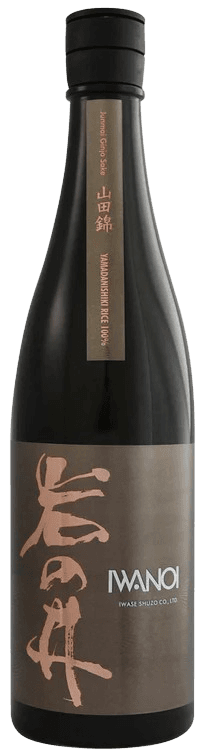
Iwanoi Junmai Ginjo Yamahai Nakagumi Nama
Score from Experts

87
Rating from Customers
4.3
1 reviews